
By Amy Shepherd
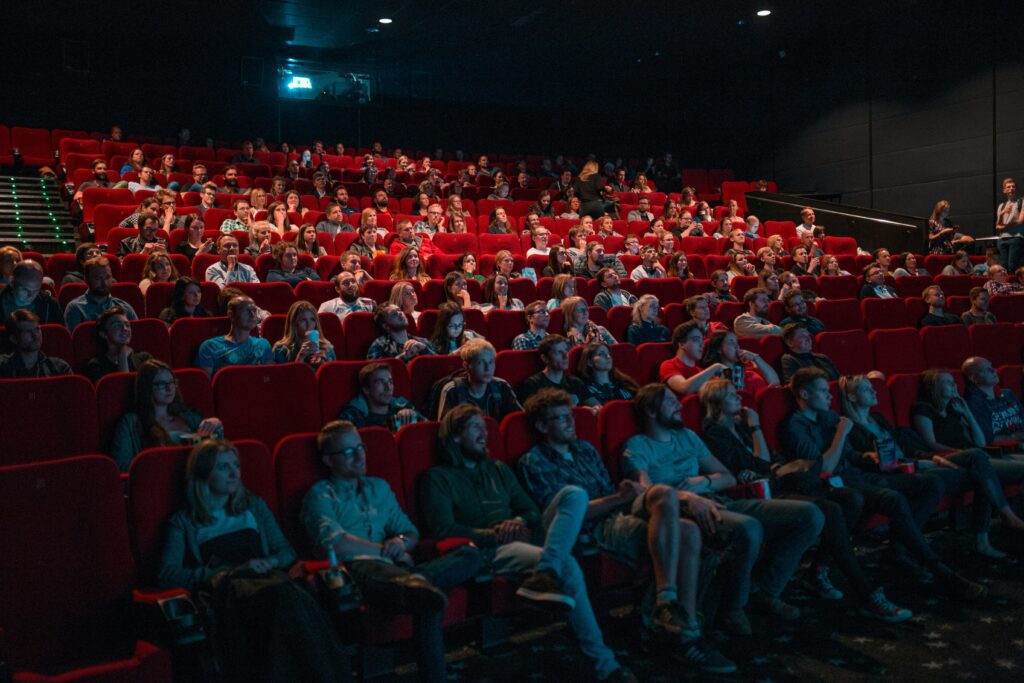
Cinema has always been a social experience, and a special night out. Over generations, people have gathered in the projector room to find community, escapism, spectacle – to experience something that feels bigger than themselves.
These days, there’s also something else at play.
Millennials and Gen Z are the world’s most dominant spending bloc ever – Gen Z alone is on track to control $12 trillion in global spending by 2030. And they are increasingly filtering for meaning: deciding what is worth their hard-earned wages based on values, and consciously investing in experiences that shape who they become.
They aren’t buying entertainment, but entry to cultural moments of significance.
Cost of living is the top concern for both generations – almost half of each group lives paycheck to paycheck, and more than three-quarters actively wait for discounts before committing to a purchase. These are not impulsive consumers. And yet, they still choose cinema.
Millennials spend with a clear hierarchy: experiences over possessions, memorable moments over accumulating things, shared adventures over solitary consumption. And they want authenticity at every touchpoint.
Gen Z are simultaneously price-conscious, experience-driven, brand-aware, and quick to switch – they’ll move across five or more channels before committing to a purchase, expect total consistency at every step, and have almost zero tolerance for friction. Over 60% will pay more for convenience, because they understand that time is their scarcest resource.
What both generations share is intentionality. They trade down on everyday spending specifically to protect what researchers now call “affordable affluence”: meaningful indulgences that feel emotionally or socially worth it.
When done well, cinema clears that bar decisively.
But still, is it doing enough?
We know that audiences are choosing to reward big screen titles with their time and money through box office data. It’s actually a really hopeful signal that, every week, millions of people, despite financial pressures, competing priorities, and media saturation, are still choosing, deliberately and repeatedly, to go to cinemas and gather around stories. Premium formats, immersive experiences, deluxe seating, unique concessions, and event-quality screenings also consistently outperform standard presentations.
But box office data tells only part of the story. It’s no longer enough to surface simply that audiences attended particular releases without asking why they willingly left the comfort of home.
Audiences buying cinema tickets aren’t paying for content; they’re seeking a route to identity, belonging, and participation. A cinema ticket competes not with a streaming subscription but with a music festival, a creator event, a weekend away, a special dinner that becomes a lasting memory. It’s part of the purchase pattern – Millennials and Gen Z don’t just want to be able to say “I was there”, but rather “I was part of something that mattered”.
This implies an entire category of cinema attendance that current data collection doesn’t surface: people who show up because of what a story represents in their own lives.
The audience for Moonlight in 2016. The women who packed screenings of Barbie in intergenerational groups across fifty countries. The young South Asian audiences who turned out for Monkey Man in numbers that surprised every projection model. The teenagers who watched Aftersun, and felt, perhaps for the first time, that the specific texture of their grief was something others understood. Did anyone ever ask what was truly pulling these audiences in?
What need are the audiences turning out for 2026’s big hits trying to satisfy? Was the outing a date night? Did friends organise a cinema trip because the film reflected something they desperately wanted to talk about? Was the purchase someone hoping to understand their peers, or family better? Did people simply need to sit in a room with strangers who were feeling what they were feeling? The industry mostly has no idea.
Which means we don’t even know what kind of society audiences are asking us to build.
Box office data has always been treated as a measure of demand, to which the industry should respond. Successful films generate sequels, shape commissioning decisions, and influence the kinds of stories that reach our screens next. Every sold-out screening strengthens one version of culture over another.
In today’s purpose-centred consumer society, audience purchase signals carry an additional layer of meaning.
Every cinema ticket sold today represents a vote for the type of stories society believes should shape the future the next generations will inherit. Which means that counting a film’s financial revenue is no longer enough; we need also to understand what people believed they were voting for.
Millennials and Gen Z are the first generations whose cultural preferences are tracked, monetised, and fed back to them in real time. They have high expectations for how their money should deliver. They are also the generations now making the choices that will determine which stories receive the resources to reach and influence the next generation. Fixing the feedback loop with these groups should be an urgent industry priority.
If cinema gets this right, there is enormous commercial growth potential. Gen Z moviegoing has already increased by 25% year-on-year over the last five years. How many more people might pass through the doors if the narrative, the event experience, and the cultural message all synergistically satisfy exactly the significance that younger audiences are seeking?
And what industry decision-making might change for the better if we measured film success not just by how many tickets were sold, but by how a story helped build the kinds of relationships, values, and communities that audiences want to invest in?