
By Amy Shepherd
Loneliness is rife right now. But with the tools now available, it’s easy to imagine a future where everybody is able to find their people. AI already knows who we are, what we like, what we fear, what makes us laugh, where we spend our time. The internet has spent two decades sorting us into increasingly refined tribes. The next generation of algorithms could quite easily finish the job.
Some days, it sounds idyllic – a personalised AI agent guiding me effortlessly towards people who think like me, vote like me, consume what I consume, and reinforce the stories I already tell myself about the world. It’s human, it’s frictionless, it’s guaranteed companionship. But comfort isn’t community. And isn’t it missing something essential?
What if the real danger facing us isn’t loneliness at all, but over-sorting?
While we’re busily engaged in using technology to optimise productivity and social enjoyment, we’re inadvertently making society less pluralistic, less curious, less capable of encountering difference without fear. What if, in solving for isolation, we become comfortably disconnected from everyone except people exactly like ourselves?
In a strange way, many of us were raised on just this fantasy. The defining story of a generation began with an algorithm – the Hogwarts Sorting Hat looked inside you, identified your essential traits, and assigned you to your people. At the time, it felt magical. Today, it feels eerily familiar.
Is it coincidence that the same generation of children who grew up imagining themselves sorted into perfect school groupings are now the adults reporting unprecedented loneliness? Perhaps not. We yearn to be seen and known, but we’ve become more accustomed to social media performance than actual vulnerability. As first-gen tech adopters, we’ve learned quickly the ease of AI, which gives us answers with a very welcome side of compliments. We’ve almost lost the understanding that for connection to be meaningful, we need more than compatibility.
Harry Potter becomes most interesting when the rigid sorting boundaries begin to break down. The war is won because friendship proves larger than identity. The story’s end – Harry naming his son after the man he thought his enemy – reveals that the relationships that shape us most profoundly are rarely the ones that confirm who we already think we are; they are the ones that stretch us beyond ourselves.
Sometimes, the people that matter most in our lives are those who choose to stick with us – or with whom we choose to stick – despite discovering quite how deep our differences run.
What if the goal was never simply to “cure loneliness”, but to remain connected to people we might never expect to understand?
Loneliness is BIG business – by some estimates it’s a VC market worth upwards of $500billion. But are any of the digital chatbot or connection products and services flooding our feeds actually capable of solving society’s problems?
This is where art still critically matters in a way technology cannot replicate. Art works because it begins from a shared truth – that we are all essentially variations on the same human story. While algorithms can tell us if someone shares our interests or beliefs, culture asks whether we can recognise ourselves in a stranger.
Documentary is perhaps the purest expression of that idea. It asks who we might have overlooked, and introduces us to people we did not choose, lives we were not searching for, perspectives that sit beyond our range. It reminds us of something older and larger than our pronouns, preferences, or affiliations: the messy, contradictory, beautiful experience of being human.
Instead of sorting us into smaller and smaller groups, documentary reminds us that our “group” is humanity itself.
Fiction can reveal profound truths, sometimes more effectively than journalism. But non-fiction storytelling embodies a particular act of trust. A real filmmaker turns their attention towards a real person and says: this life matters. A real protagonist agrees to give something true of themselves to the world. And an audience spends time with and is offered a chance to care about someone with whom they may have nothing in common at all.
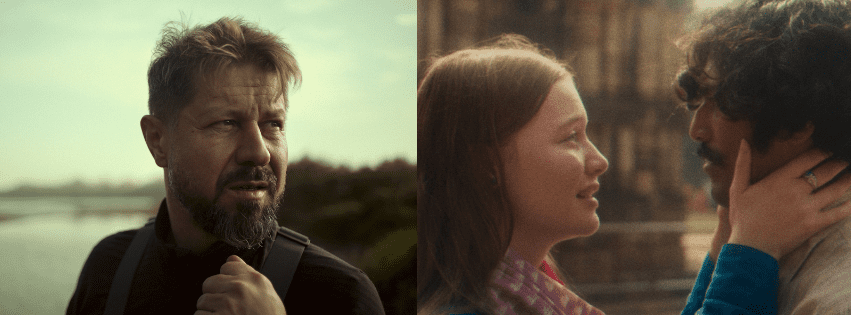
Two films this summer hinge on that notion – that the relationships which stay with us are often the ones we never could have predicted. Michał Marczak’s Closure follows a father’s search for his missing son, only to discover a community bound together by loss and grief. In Orlando von Einsiedel’s The Cycle of Love, a man’s journey across continents unfolds through curiosity, compassion, and trust. Neither story is really about finding the right people, they’re about remaining open to the unexpected ones.
While loneliness teaches us that we need one another, wisdom teaches us that neither more connection, nor even deeper connection with a limited set of individuals is the answer – we need wider circles of connection. Friendship starts with similarity, but solidarity thrives on shared humanity. The traits that make us most human – empathy, creativity, vulnerability – are not simply tools for personal fulfillment; they are pathways to more expansive whole-of-society belonging and flourishing.
If AI succeeds, we may become extraordinarily efficient at finding people like us. The harder, more important, task is to remember why people unlike us matter too.